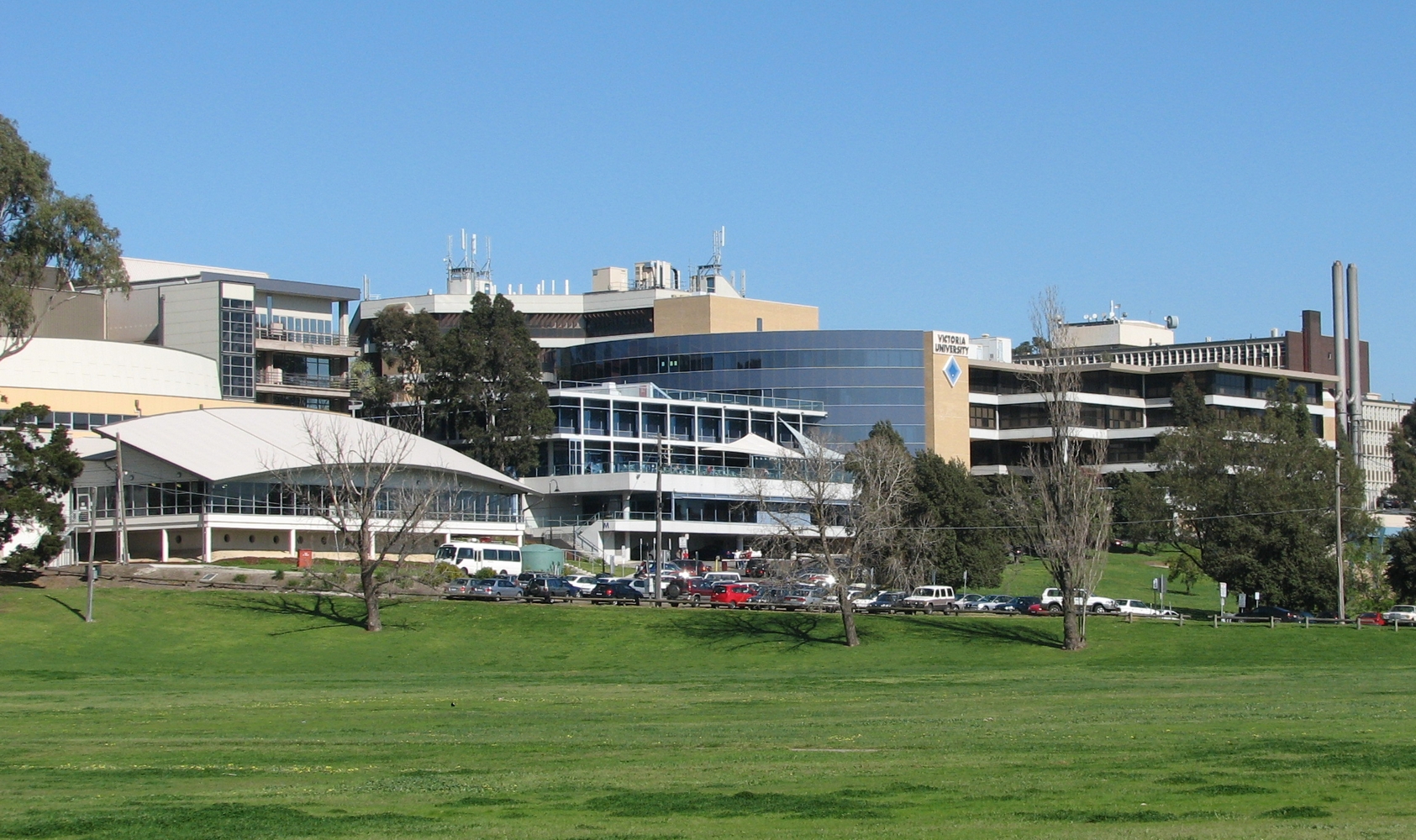
Victoria University
Melbourne's west-side dual-sector university, where undergraduates study one subject at a time in four-week blocks.
- Students
- 52,656
- Tuition
- A$39,000
- From · 2027
- Founded
- 1916
- QS World Ranking
- #696
- 2027 edition
About VU
Victoria University began in 1916 as the Footscray Technical School, which opened with 220 students and nine teachers in Melbourne's industrial west. It became Footscray Institute of Technology, merged with the Western Institute and was established as Victoria University of Technology in 1990, taking its current name in 2005. VU is one of only six Australian universities that teach both TAFE and higher education, and in 2025 it had 52,656 students: 39,571 in higher education and 13,085 in vocational education.
VU was the first university in Australia to teach through a block model. Under the VU Block Model, undergraduates study one unit at a time over four weeks, in three-hour workshop-style classes three days a week, and usually get results the Monday after a block ends. Teaching is organised through the College of Arts, Business, Law, Education and IT, the College of Sport, Health and Engineering and a dedicated First Year College.
The university is best known for sport and exercise science, where ShanghaiRanking places it 6th in the world, and for health courses tied to hospitals in Melbourne's west. About 41% of students are the first in their family at university. It suits students who want small, practical classes, an accessible entry route (many degrees have no minimum ATAR) and a mostly urban campus network from the CBD to Footscray, St Albans and Werribee.
The Door of Opportunity
University motto
Why students choose VU
The VU Block Model means one subject at a time, three-hour classes three days a week, and results usually the Monday after a block finishes.
Sport science at VU is ranked 6th in the world (ShanghaiRanking 2025) and backed by a A$68 million sport and exercise research facility.
Many bachelor's degrees, including Business, Engineering, IT and Sport Science, have no minimum ATAR, with entry based on published criteria.
Nursing students complete 800 placement hours and train at Sunshine Clinical School inside Sunshine Hospital.
Admissions
Semester 1 2027 entry (February 2027)
Selectivity
VU does not publish an acceptance rate. Most undergraduate courses do not use the ATAR; for those that do, the lowest selection rank offered a place for Semester 1 2026 was, for example, 64 for Nursing, 66.20 for Laws, 68.05 for Paramedicine and 80.55 for Biomedicine. Business, Engineering (Honours), Information Technology, Psychological Studies and Sport Science have no minimum ATAR.
Typical entry requirements
| VCE / ATAR (lowest selection rank, Semester 1 2026) | No minimum ATAR for Business, Engineering (Honours), IT, Psychological Studies and Sport Science; Nursing 64; Laws 66.20; Paramedicine 68.05; Biomedicine 80.55; plus subject prerequisites such as a study score of 25 in English (30 in EAL) for Nursing |
|---|---|
| International secondary qualifications | A secondary qualification equivalent to Australian Year 12, checked against VU's international academic entry requirements guide and each course's criteria |
| Adjustments | Up to 20 adjustment points can be added to your ATAR selection rank; VU Early Entry adds five bonus points for most ATAR courses |
| English language | IELTS 6 · TOEFL iBT 67 Bachelor's degrees: IELTS Academic 6.0 with no band below 6.0, TOEFL iBT 67 (with section minimums), PTE 52 with no section below 52, or CAE 169. Health degrees set higher levels: Nursing requires IELTS 7 in line with the Nursing and Midwifery Board of Australia standard, and Biomedicine IELTS 7. Tests must be taken within two years of the course start. |
Deadlines
- VU Early Entry (Year 11 and 12 students) Non-binding Next deadline · In 5 days11 October 2026, 10:00pm AEST
Conditional offers start arriving in October 2026; you must also list the VU course on your VTAC preferences. The five-point ATAR bonus is applied when results come out in December 2026.
- Semester 1 2027 start Non-bindingFebruary 2027
Semester 1 begins in February; scholarships for Early Entry students are awarded then.
VU Early Entry dates are from VU's Early Entry page (checked 29 September 2026). Domestic applicants apply through VTAC, whose 2027 timely application dates are set by VTAC. VU does not publish a single international deadline; it asks international applicants to apply early enough to receive an offer and visa for their preferred intake.
How to apply
Year 12 and other domestic applicants apply through VTAC and can join the VU Early Entry program for a conditional offer before results. International students apply directly online or through a VU-approved education agent (compulsory in some countries), pay a A$75 application fee and upload transcripts, English results and passport; credit applications should be lodged at least 10 business days before the course deadline.
What admissions looks for
- Your educational background and results against each course's published criteria, including ATAR where it is used.
- Subject prerequisites and English scores, such as a VCE study score of 25 in English (30 in EAL) for Nursing.
- Work experience, life skills, selection tasks (folios, auditions, tests or interviews) and eligible adjustments or special entry schemes.
- For international applicants, meeting academic and English requirements and providing complete, certified documents.
Tips for applying to VU
- 1 If you are in Year 11 or 12, apply for VU Early Entry before 11 October 2026: it can mean a conditional offer in October and five bonus ATAR points for most courses.
- 2 Check whether your course uses the ATAR at all; many VU degrees, including Engineering and IT, admit on other criteria.
- 3 International STEM applicants applying from outside Australia can be considered for the STEM Accommodation Scholarship, worth up to a year's free accommodation at UniLodge VU.
- 4 Plan for the Block Model: you sit one unit at a time, so keeping up in the first week of each four-week block matters.
Costs & financial aid
2027 · figures in AUD
New international students starting eligible courses at VU Melbourne in 2026 and 2027 are automatically assessed for the VU Block Model International Scholarship: 10%, 20% or 30% off first-year tuition based on prior results (at least 10% for anyone meeting the entry requirements; 30% places are limited). Some courses have fixed rates, for example 30% for the engineering degrees and 10% for Nursing, and the scholarship can continue each year with a WAM of 50% (10%), 70% (20%) or 80% (30%). The STEM Accommodation Scholarship offers up to a year's free accommodation (worth up to A$15,500) to selected offshore STEM applicants. VU Early Entry applicants can win A$5,000 Achiever, Community or Innovator scholarships or a year of free accommodation.
- 10%, 20% or 30% off first-year tuition based on merit (minimum 10% if you meet entry requirements; Nursing 10%, engineering degrees 30%)
- VU Block Model International Scholarship
- Up to one year free at UniLodge VU, worth up to A$15,500
- STEM Accommodation Scholarship (international)
- A$5,000 (Achiever, Community, Innovator)
- VU Early Entry scholarships
Academics
Academic calendar: VU Block Model: one unit at a time in four-week blocks (four blocks per semester), with optional summer and winter blocks
Bachelor of Sport Science
VU is 6th in the world for sport science (ShanghaiRanking 2025); no minimum ATAR, A$39,000 a year for international students in 2027.
Bachelor of Nursing
800 professional practice hours and 140 simulation hours at Sunshine Clinical School, with placements across 200+ clinical agencies.
Bachelor of Paramedicine
Lowest selection rank 68.05 for Semester 1 2026, backed by VU's partnership network including Ambulance Victoria.
Bachelor of Laws
Taught by Victoria Law School in the CBD; lowest selection rank 66.20 for Semester 1 2026.
Bachelor of Engineering (Honours) (Civil Engineering)
Four-year honours degree with no minimum ATAR, eligible for the STEM Accommodation Scholarship for offshore international applicants.
Bachelor of Biomedicine
VU's most selective listed ATAR course (80.55 for Semester 1 2026), requiring IELTS 7 for international students.
Research
- The Institute for Health and Sport and a A$68 million sport and exercise research facility underpin VU's top-ten global standing in sport science.
- The Mitchell Institute is one of Australia's leading education and health policy think tanks.
- The Centre of Policy Studies builds economic models used by governments and businesses around the world.
Schools & faculties
- College of Arts, Business, Law, Education and IT
- College of Sport, Health and Engineering
- VU First Year College
- Centre of VU Transitions
- School for the Visitor Economy
- TAFE at VU
In the 2025 QILT Employer Satisfaction Survey, 87.5% of employers reported satisfaction with their VU graduate, against an 84.2% national average. VU was also first in Victoria for skills development in the QILT Student Experience Survey.
Student life
VU is a commuter-heavy, diverse university spread across Melbourne's CBD and western suburbs. The 32-level VU City Tower anchors the City Campus in the legal precinct, while Footscray Park sits beside parkland on the Maribyrnong River, a short walk from Footscray Station, with the 12-storey UniLodge VU residence across the road. The Block Model shapes the week: three-hour classes on three days leave time for work and sport. VU has close ties with the Western Bulldogs and other professional sport partners.
- UniLodge Victoria University, a 12-storey student residence opposite Footscray Park campus.
- The Olympic and Paralympic Research Centre, part of the global Olympic Studies Centres network.
- Partnerships with the Western Bulldogs, Western Health and Ambulance Victoria for placements and jobs.
- More than 40% of students are the first in their family to attend university.
Housing. UniLodge Victoria University offers purpose-built student housing directly across the road from Footscray Park campus.
Location
Most of VU's campuses are in Melbourne's inner and outer west: Footscray (Footscray Park and Footscray Nicholson), St Albans, Sunshine and Werribee, with a City Campus tower in the CBD. Melbourne offers extensive public transport, a big sporting culture and many part-time jobs, though rents are high. International students can also study at VU Sydney or VU Brisbane.
Nearest airport: Melbourne Airport (MEL)
Notable alumni
- JC Jeffrey CheahMalaysian founder of the Sunway Group; business degree from Footscray Institute of Technology (now VU)
- AG Andrew GazeBasketballer who led Australia at five Olympic Games; attended Victoria University
- PM Pia MirandaActor (Looking for Alibrandi); Bachelor of Arts (Performance Studies), 1996
- NN Nyadol NyuonLawyer and advocate for the South Sudanese community; Bachelor of Arts
- DM Danny MorseuFirst Torres Strait Islander to represent Australia at the Olympics; BA in recreation from Footscray Institute of Technology (1984)
- BG Brad GreenFormer Melbourne AFL footballer; VU alumnus
- TL Tammy LobatoFormer Victorian MP; Bachelor of Arts (Community Development)
Frequently asked questions
What ATAR do you need for Victoria University?
Many VU degrees, including Business, Engineering, IT and Sport Science, have no minimum ATAR. For Semester 1 2026, the lowest selection ranks offered were 64 for Nursing, 66.20 for Laws, 68.05 for Paramedicine and 80.55 for Biomedicine.
What is the VU Block Model?
You study one subject at a time over four weeks, in three-hour classes three days a week, and usually get your results the Monday after the block ends. All VU bachelor's degrees in Melbourne and Sydney use it.
How much are Victoria University fees for international students?
For 2027, international tuition is A$19,500 to A$21,750 per semester, about A$39,000 to A$43,500 a year, e.g. A$39,000 for Business and A$43,500 for Nursing.
What IELTS score does VU require?
IELTS Academic 6.0 with no band below 6.0 for most bachelor's degrees; Nursing and Biomedicine require IELTS 7.
When does VU Early Entry close?
Applications for VU Early Entry close on 11 October 2026 at 10pm AEST, with conditional offers from October.
Sources & methodology
Figures on this page were checked against official university publications, national application services and ranking publishers in September 2026. Each number is shown with the year or admissions cycle it describes. Always confirm deadlines and fees on the university's own website before applying.
Explore nearby in the world top 100
Universities ranked close to VU in the QS World University Rankings 2027.