
Test-Required Colleges 2027: How the SAT and ACT Comeback Changes Your Strategy
The test-optional era is not over, but the strategy has changed. For several years, applicants could treat the SAT and ACT as a bonus: submit if strong, hide if weak. By the 2027 cycle, that approach is too casual. A growing group of highly selective colleges now require testing again, and many test-optional schools still use strong scores as useful academic evidence.
If you are applying to college in 2027, the practical rule is simple: plan as if testing matters, then decide how to use your scores school by school.
What Actually Changed
The biggest change is not that every college suddenly requires the SAT or ACT. Most colleges still remain test-optional. The change is that some of the most influential admissions offices have moved back toward required testing, and that makes testing strategy relevant for almost every ambitious applicant.
Recent policy shifts show three patterns:
- Some colleges require the SAT or ACT for all first-year applicants
- Some allow limited substitutes, such as AP, IB, A-Level, or national exam scores when the SAT or ACT is inaccessible
- Many remain test-optional but continue to consider scores when submitted
That means a student who ignores testing may discover too late that a top-choice school requires scores, or that a strong score would have helped clarify an uneven transcript.
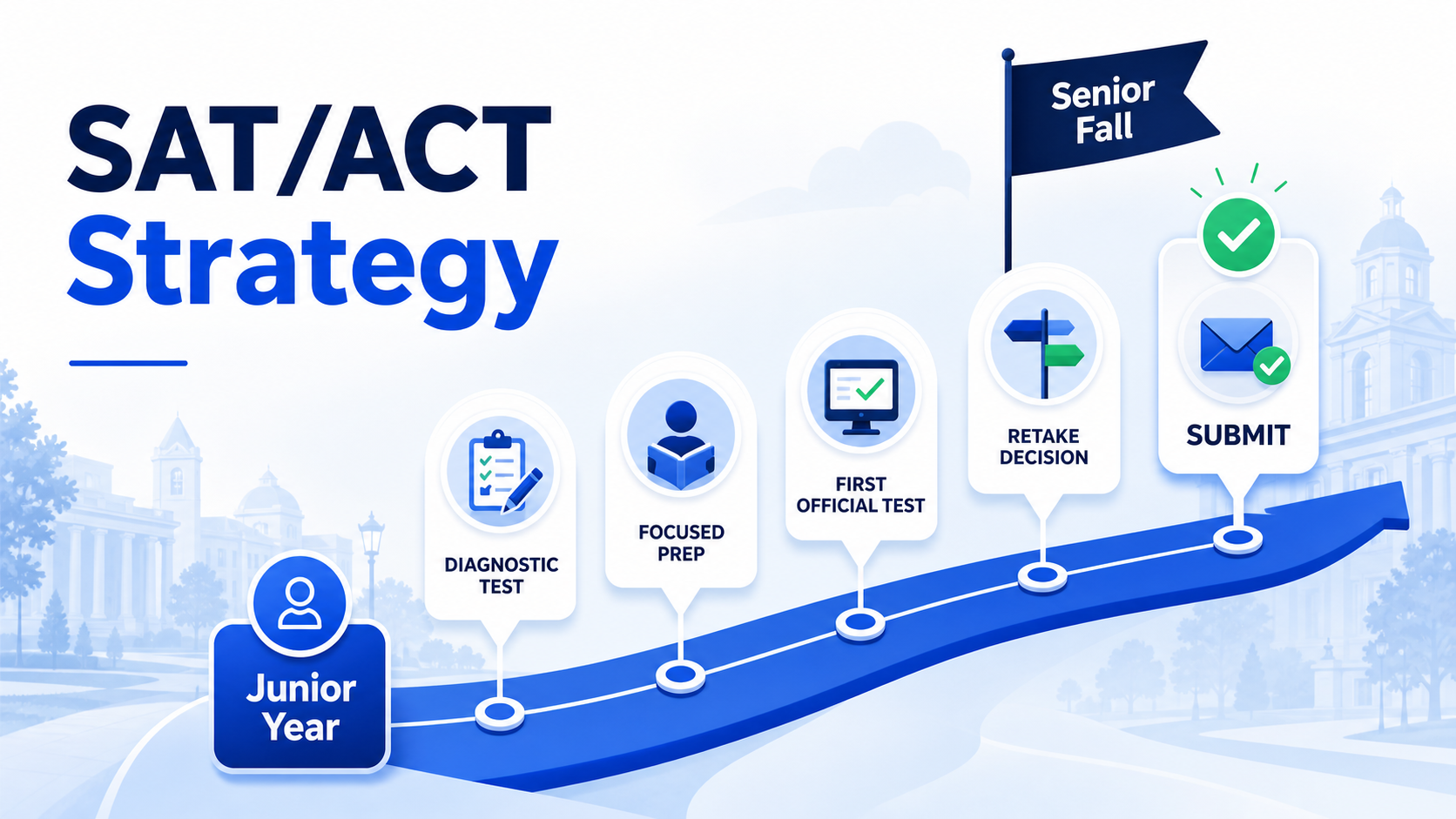
The New Testing Timeline for Class of 2031
Students applying in fall 2027 should not wait until senior year to start. Testing now belongs in junior-year planning.
Fall Junior Year
Use PSAT, PreACT, or a full diagnostic test to identify whether the SAT or ACT is a better fit. Do not choose based on what friends are taking. Choose based on your score profile, timing comfort, reading stamina, and math strengths.
Winter Junior Year
Complete a focused prep block. The goal is not endless tutoring. The goal is to understand the exam format, fix the highest-value weaknesses, and build enough repetition that the first official test is not a surprise.
Spring Junior Year
Take the SAT or ACT for the first serious attempt. This gives you enough time to retest without compressing essay writing, college visits, and recommendation requests into the same few weeks.
Summer Before Senior Year
Retake if your score is close to a meaningful threshold. If your score is far below your target range, do not sink the whole summer into testing. Balance improvement against essays, activities, and list strategy.
Fall Senior Year
Use September, October, November, or December dates only as final refinements. Early Decision and Early Action applicants should be especially careful because some colleges have last acceptable test dates.
SAT or ACT: Which One Should You Choose?
The SAT is now digital, shorter, and adaptive. The ACT has also been changing, with more flexible testing structures and a different section rhythm. Neither test is universally easier.
Choose the SAT if:
- You perform well with shorter reading passages
- You are comfortable with adaptive digital testing
- Your math accuracy is strong under time pressure
- You like fewer but more concentrated question types
Choose the ACT if:
- You work quickly across many questions
- You prefer a more predictable section structure
- Your science-style data interpretation is strong
- You do better with a paper-like pacing feel
The cleanest method is to take one full-length diagnostic of each test under timed conditions. Compare percentile equivalents, not raw feelings.
When a Score Helps
A strong score does three jobs in an application.
First, it validates academic readiness. This matters most when a transcript is hard to interpret, a school has grade inflation, or an applicant comes from a less familiar high school.
Second, it can offset uneven coursework. A student with a B in precalculus but a very strong math score gives admissions officers another data point.
Third, it can support merit scholarship review. Some colleges that are test-optional for admission still consider scores for honors programs, scholarships, or placement.
Find your perfect university match
Get personalized recommendations based on your profile and goals.
When a Score Hurts
Submitting a score is not always smart. A score below a college's typical admitted range can make the application feel weaker, especially if the transcript already answers the academic-readiness question.
Use this framework:
- Required school: submit the best valid score because you must
- Test-optional reach school: submit if the score is near or above the lower end of the admitted range
- Test-optional target school: submit if it strengthens the academic story
- Test-blind school: do not worry about the score because it will not be considered
The mistake is treating one score policy as universal. The right answer changes by college.
What International Applicants Should Watch
International applicants need to read policies carefully. Some colleges accept national exams, predicted scores, or curriculum-based assessments as alternatives when SAT or ACT access is limited. Others specifically require SAT or ACT scores from every applicant.
Do not assume your A-Levels, IB predicted scores, or national leaving exams replace standardized tests everywhere. Build a school-by-school testing table before finalizing your list.
How Testing Fits Into the Bigger Application
Testing is one signal. It does not replace course rigor, teacher recommendations, essays, activities, or institutional priorities. The strongest applicants use testing to support an already coherent academic narrative.
A high score with thin coursework is not enough. A high score with challenging classes, specific intellectual interests, and strong recommendations is powerful.
Practical Plan for 2027 Applicants
- Take SAT and ACT diagnostics by winter of junior year
- Pick one test and prep for it seriously
- Take a first official test by spring junior year
- Retake once or twice only if the data supports it
- Build a testing-policy tracker for every college on your list
- Decide score submission school by school
The return of testing does not mean panic. It means preparation. Students who test early, understand policies, and make disciplined score-submission choices will have more options than students who wait for senior year to react.